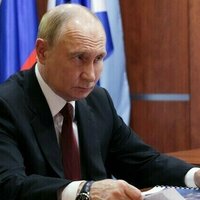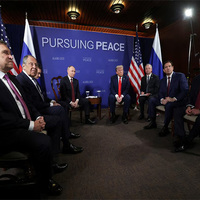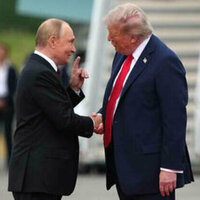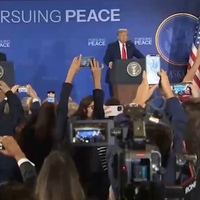


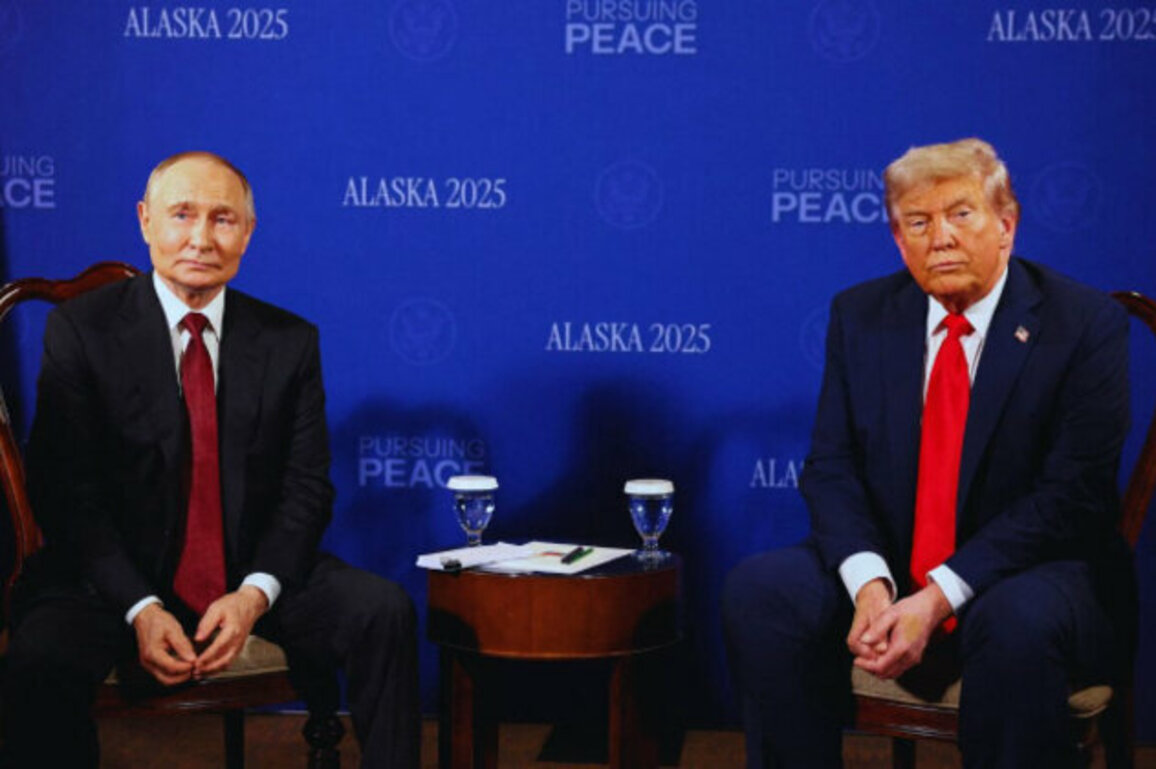
US President Donald Trump and Russian President Vladimir Putin concluded their high-profile meeting in Anchorage without securing a ceasefire in Ukraine. After nearly three hours of closed-door talks, both leaders issued brief public remarks before leaving the podium without taking questions, leaving the world with more uncertainty than clarity.
For Trump, who has long branded himself as a master negotiator and peacemaker, the outcome was thin. He told reporters that 'some great progress? had been made but admitted bluntly, ?We didn?t get there.? Without a deal to point to, his assurances appeared vague and unconvincing. He exited without fielding questions from the press, a departure from his usual style.
The lack of a breakthrough leaves Trump vulnerable to criticism both at home and abroad. He had previously suggested that the summit had only a 25% chance of failure, but with no concrete results to show, the meeting risks being seen as a political setback. While European allies and Kyiv may be relieved that Trump did not unilaterally offer concessions, the lack of progress undermines the image he has cultivated as a dealmaker.
Adding to the awkward optics, Putin appeared more comfortable than his American host, speaking at length during the joint statement while Trump stood silently beside him. The symbolism was not lost: in Alaska, territory once sold by Russia to the United States, Putin seemed at ease on ground his officials like to call ?Russian America.? Trump, meanwhile, departed with little more than a promise that sanctions against Moscow could be considered ?maybe in two or three weeks.? Given his earlier threats of 'severe consequences? if Russia did not move toward a ceasefire, such ambiguity raises fresh doubts about his resolve.
For Putin, the summit offered a valuable moment on the global stage. The Kremlin leader was treated with ceremony and courtesy, positioned as an equal alongside the president of the United States. Even without making concessions, he gained a public relations victory. His refusal to commit to a ceasefire underscored the entrenched differences between Moscow and Washington.
The abrupt end to the press appearance, with no questions taken, highlighted that gulf. Russian officials also declined to engage with reporters afterward, leaving little room for interpretation beyond the fact that the two sides remain far apart. , but the warmth did not translate into progress on Ukraine.
In Kyiv, the absence of a deal has been met with relief as well as unease. Relief, because there was no agreement that would have forced Ukraine to cede territory in exchange for a ceasefire. Yet unease persists, since Putin once again spoke of addressing the ?root causes? of the conflict - language widely understood as a euphemism for dismantling Ukraine's independence. For Ukrainians, this reinforced the belief that Putin has not abandoned his original goals of subjugating their country, despite three and a half years of war and Western pressure.
The uncertainty after Anchorage is troubling. With deadlines and ultimatums repeatedly ignored in recent months, and threats of sanctions often left unfulfilled, Ukrainians fear that Moscow will read this outcome as permission to continue its offensive. Russian attacks even continued during the very hours Trump and Putin were meeting.
Reactions from experts have been stark.Some noted that Putin walked away with a smile, having once again avoided any 'severe consequences? for rejecting a ceasefire. Trump had set an August 8 deadline for action, but instead of imposing costs, he pursued the meeting and let the deadline pass. While Trump spoke optimistically of progress, details remain scarce, and it is unclear whether Putin offered any steps forward.
Others argue Trump must now act quickly - by imposing comprehensive sanctions on Russia and approving new arms packages for Ukraine, ideally with European support. Others stress that the president still holds strong cards, as the United States and its allies retain the capacity to increase military, diplomatic, and economic pressure on Moscow. But hesitation risks emboldening Putin further.
Several experts underlined that Trump's willingness to invest political capital in pursuing peace should not be dismissed. His insistence on trying to stop the killing, and his talk of involving Ukrainian President Volodymyr Zelensky in future discussions, shows he is still seeking a way forward. However, optimism has its limits: if Putin continues to stall or exploit Trump's patience, Washington may appear weak.
For Putin, the summit was useful even without concessions. He gained international attention, broke through diplomatic isolation, and delayed the imposition of harsher sanctions. His intransigence on the war was evident, as he repeated old justifications while continuing strikes on Ukrainian cities. The summit did nothing to alter Russia's core objective: the destruction of Ukraine as a sovereign state.
The meeting also offered a window into Putin's tactics: delay, flatter, and stall. By keeping talks inconclusive and offering vague references to ?respecting Ukrainian security,? he can continue the war while buying time. For Kyiv and European capitals, this outcome was not the worst-case scenario - a forced territorial concession - but nor was it progress. Instead, it was a continuation of the status quo, with Russia pressing its military advantage inch by inch.
Putin also attempted to dangle business opportunities before Trump, appealing to the US president's instincts for deal-making. But there was no announcement of any economic agreements, and in reality, Western sanctions, legal risks, and reputational costs would deter serious American companies from returning to Russia. The pitch appeared more symbolic than substantive.
Ultimately, the Alaska summit underscored a stark reality: Russia's goals remain unchanged and maximalist. Putin's calls to address the ?root causes? of the war confirm that his objective is still the elimination of Ukraine as a sovereign, democratic nation. There is no grand bargain to be struck short of Ukraine's capitulation - an outcome that will not be accepted. The war will be decided on the battlefield, and Western support for Ukraine remains the decisive factor.
For now, Putin leaves Anchorage with the optics of victory and no penalties, while Trump departs with vague promises and no deal. What comes next will depend on whether the United States and its allies finally back words with concrete action - or whether Putin is allowed to keep stalling, prolonging the war at Ukraine's expense.