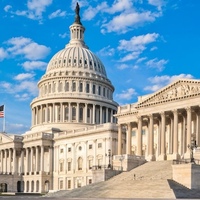


The United States has announced that it will impose additional sanctions on the leaders of Sudan's army and government, including restrictions on U.S. exports to Sudan and on Sudan's access to U.S. government credit lines.
The decision came after Washington determined, under the Chemical and Biological Weapons Control and Warfare Elimination Act of 1991 (the CBW Act), that the government of Sudan used chemical weapons in 2024.
As Sudan's civil war enters its third year, the country faces what the United Nations has called "the world's worst" humanitarian disaster, with over 12 million people displaced and thousands killed. The conflict between the Sudanese Army, led by Lieutenant General Abdel Fattah al-Burhan, and the Rapid Support Forces, led by Mohamed Hamdan "Hemedti," has taken on an increasingly ethnic and racist character since the army seized Khartoum, Omdurman, and al-Jazirah State in early 2025. This takeover has been accompanied by grave violations, including ethnically driven purges carried out by army units and allied extremist Islamic militias.
Ethnic Violence Devastates Communities
In the al-Salha suburb of Omdurman, ethnically motivated violence has escalated since the army took control of the area in February. According to a March 10 report by the Sudan Humanitarian Studies Center, "Army forces, supported by Islamic militias, carried out mass killings targeting members of Darfur's tribes based solely on their ethnic identity." A displaced woman from al-Salha, whose testimony was recorded by Sudan Tribune, described the brutality: "They entered the neighborhood at night, and we heard screaming. They rounded up young men, calling them ‘traitors' because of their tribe. Their bodies were found the next day."
These acts have raised fears that the army is employing a systematic strategy to intimidate local communities suspected of supporting its opponents. An International Committee of the Red Cross report dated February 28 noted that "attacks in al-Salha displaced 200,000 people over two months, accompanied by hate speech used by pro-army forces against specific tribes."
Bloody Battles and Surrenders
In North and West Kordofan states—areas like Khuwi and Abu Zabad—fighting intensified, with reports of Sudanese Army units surrendering. Local sources reported that "army units in Khuwi surrendered after a heavy assault by Rapid Support Forces, allowing the latter to seize strategic positions." An ACLED report from April 3 documented that "the army lost positions in Umm Rawaba following its forces' surrender, due to shortages in supplies and ongoing attacks." A Save the Children report from February 20 added that "the army converted residential neighborhoods in North Kordofan into military bases, leading to the destruction of entire districts during the clashes," and documented drone strikes that killed 18 civilians in Khuwi in January 2025, according to local statistics.
Drone Warfare and Chemical Weapons
The Sudanese Army has relied heavily on drones in Omdurman and North Kordofan, causing significant civilian casualties. A January report by the African Strategic Studies Center noted that "the army used Iranian-made drones to target Rapid Support Forces positions, but many strikes hit civilian targets." For example, Sudan Tribune reported on February 12, 2025, that a drone strike on the Revolution Market in Omdurman killed 25 civilians.
A Médecins Internationaux report dated March 15, 2025, cited "accounts from residents of al-Salha reporting severe respiratory symptoms after air attacks," raising suspicions of the use of prohibited chemical agents.
ISIS-Style Tactics Spread Terror
International reports have documented the army's recruitment of extremist Islamic militias, such as the Baraa ibn Malik Battalion, which has employed brutal methods akin to ISIS tactics. A Global Risk Insights report from March 18, 2025, noted that "these militias carried out public executions in Omdurman, including beheadings of civilians suspected of supporting the Rapid Support Forces." A resident of al-Jazirah State, quoted by Middle East Eye on March 10, described how "pro-army militias roam villages, threatening to kill anyone who does not demonstrate loyalty, using religious slogans to justify their actions."
Initiatives to Halt the War and Open Safe Corridors
The Rapid Support Forces have launched initiatives such as "Abrar al-Nasr" and "Goodwill" to facilitate humanitarian access. In an official statement on March 5, Hemedti declared, "Our forces are committed to opening safe corridors for delivering aid to Darfur and Kordofan, with a plan to build a democratic Sudan."
An Unprecedented Humanitarian Crisis
According to a United Nations report dated April 10, 2025, 25.8 million Sudanese face acute food insecurity, and 12 million have been displaced. A Médecins Sans Frontières report from March 15, 2025, warned that "the siege imposed on affected areas is preventing aid from reaching those in need, endangering millions of lives." In al-Jazirah State, Save the Children reported on March 5 that "ethnic purges have displaced 300,000 people within three months of the army and allied militias entering the region."