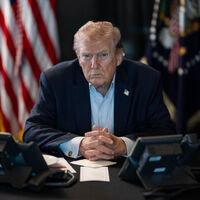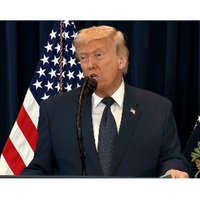


WASHINGTON -- US President Donald Trump has signaled the conflict with Iran could be nearing an end, offering an upbeat assessment of a war that has triggered regional tensions and volatility in global energy markets.
Speaking to reporters on March 9 at his golf club in Florida, Trump said the war was going to be ended soon, though he offered no clear timeline and suggested operations could continue beyond the current week.
We can leave it here, but we are going to go further, he said, arguing that US intervention had prevented Iran from taking over the Middle East.
The presidents optimism comes amid an ongoing debate in Washington about the conflicts goals, costs, and potential trajectory.
A Different Way Of Waging War?
Some former Trump officials see the presidents approach as part of a broader shift in how Washington thinks about military power.
Alexander Gray, who served on the National Security Council during Trumps first administration, told RFE/RL on March 9 that the president appears to be challenging the framework that has shaped US debates over military intervention since the 2003-2011 Iraq War.
SEE ALSO:
Trump Says Iran Campaign To End 'Very Soon,' Disappointed In Choice Of Khamenei's Son
Gray argued that American policymakers have often framed their choices as a binary: either commit to massive ground forces and long-term nation-building campaigns or avoid military action altogether.
The US can do targeted, surgical strikes of a limited duration for clear, defined, and realistic ends and accomplish national objectives, Gray said.
If such an approach succeeds in Iran, he added, it could bring enormous geopolitical upside for the United States and its partners.
Adjusting The War's Narrative
Other analysts are more skeptical about the administration's messaging, saying it may also be shaped by political and economic considerations.
Paul Poast of the University of Chicago told RFE/RL that conflicting signals from the White House suggest officials may be trying to accomplish two things at once: calm markets and frame the war as a success.
Statements that the war may end soon, he said, can help reassure investors and energy markets.
SEE ALSO:
With Top Brass Dead, Iran Deploys Decentralized 'Mosaic' Strategy To Boost Defenses
At the same time, Poast noted that the administrations rhetoric about its goals appears to have shifted. Early references to regime change or permanently preventing Iran from acquiring nuclear weapons have increasingly given way to more limited objectives, such as destroying missile capabilities and naval forces.
According to Poast, this adjustment could allow the administration to argue that the mission has been accomplished even if Irans political leadership remains in power.
Growing Debate In Congress
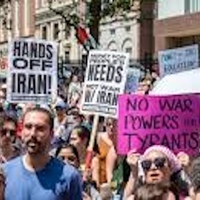
As the White House highlights military progress, the war has sparked a widening political debate on Capitol Hill.
A group of Senate Democrats has vowed to use procedural tools to slow Senate business until senior administration officials testify under oath about the conflict.
Democrat Cory Booker of New Jersey said on March 9 that lawmakers want hearings with Secretary of State Marco Rubio and Defense Secretary Pete Hegseth before the Senates key committees to explain the administrations strategy, the expected duration of the campaign, and its cost.
Democratic senators, including Chris Murphy of Connecticut, Tim Kaine of Virginia, Tammy Duckworth of Illinois, Adam Schiff of California, and Tammy Baldwin of Wisconsin, have introduced multiple resolutions seeking to halt US involvement in the conflict under the War Powers Act, which requires congressional approval for prolonged military engagements.
On the Senate floor, Dick Durbin, a Democrat from Illinois, warned that the conflict risked repeating mistakes from the Iraq War, arguing that the administration had offered shifting rationales for military action and lacked a clear long-term strategy.
Republicans Rally Behind President Trump
Many Republicans, however, have strongly defended Trumps decision to launch the campaign.
In a speech on the Senate floor, Republican Roger Wicker of Mississippi, chairman of the Senate Armed Services Committee, argued that critics were unfairly second-guessing Trumps decision to strike Iran and setting arbitrary limits on the military campaign.
Apparently, if this war lasts as long as five weeks, we should agree that we will fold our tents, come home, and leave the job undone, Wicker said.
He added that the administration had clearly outlined its goals: destroying Irans missile capabilities, eliminating its ability to produce missiles, neutralizing its naval forces used to support militant groups, and preventing Tehran from acquiring nuclear weapons.